
The global vending machine industry has expanded rapidly over the past decade, driven by urbanization, changing consumer habits, and the growing demand for convenient, automated retail solutions. From snacks and beverages to electronics, personal care products, and even fresh food, vending machines are now found in offices, schools, hospitals, transportation hubs, and public spaces worldwide. As vending machines increasingly handle valuable products and cashless payment systems, security has become a critical concern for operators and equipment manufacturers.
Among the various security components used in vending machines, tubular vending machine locks play a vital role. Known for their compact design, enhanced resistance to tampering, and ease of use, tubular locks have become a standard locking solution for vending machines and other unattended equipment. Compared with traditional flat-key cam locks, tubular locks offer improved pick resistance and durability, making them well-suited for high-traffic and high-risk environments.
This article provides an in-depth look at tubular vending machine locks, covering their design principles, key features, types, materials, applications, advantages, and future development trends. By understanding how these locks function and why they are widely adopted, vending operators, manufacturers, and facility managers can make informed decisions to protect assets and ensure operational continuity.
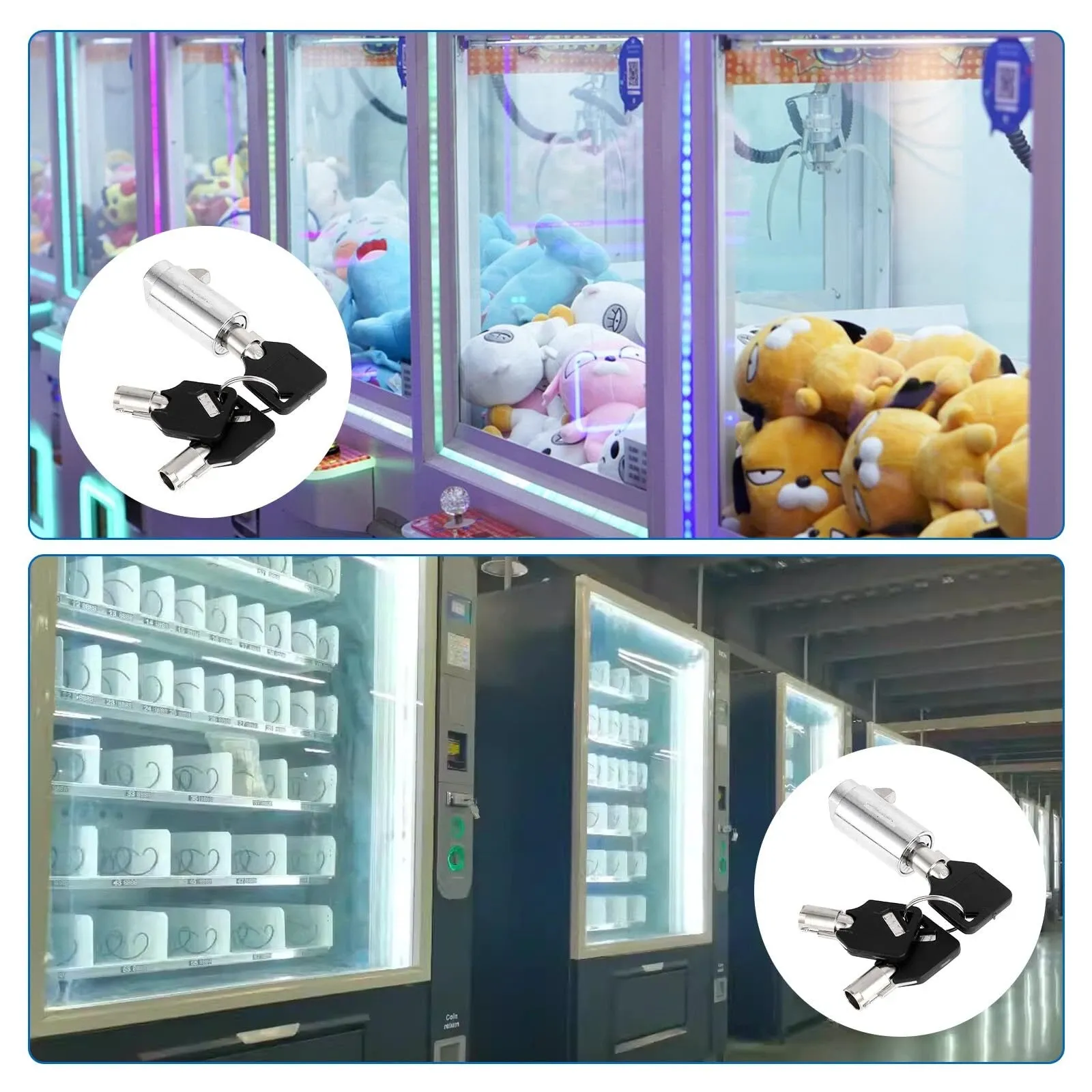
A tubular vending machine lock is a mechanical locking device that uses a cylindrical (tubular) key and matching pin arrangement to control access. Unlike conventional flat keys that align pins in a straight line, tubular locks feature pins arranged in a circular pattern around the cylinder. When the correct tubular key is inserted, it aligns all pins simultaneously, allowing the lock to rotate and disengage the cam or latch.
This circular pin configuration provides enhanced resistance to common picking techniques and unauthorized key duplication. The compact size of tubular locks also makes them ideal for installation in confined spaces, such as vending machine doors, cash boxes, and service panels.
Tubular vending machine locks are typically designed as cam locks, meaning they operate with a rotating cam that secures or releases the machine door. Their robust construction and simple operation make them a reliable choice for unattended equipment requiring frequent servicing.
Vending machines are inherently vulnerable because they operate without on-site supervision. They often contain valuable inventory, cash, or sensitive electronic components, making them attractive targets for theft and vandalism.
Unauthorized access can result in stolen products, damaged machines, data breaches, and costly downtime. For operators managing large vending fleets, even minor security weaknesses can lead to significant financial losses over time.
Tubular vending machine locks address these challenges by providing a strong mechanical barrier that deters opportunistic theft and delays forced entry attempts. Their presence alone can discourage tampering, while their durability ensures long-term protection in demanding environments.
A typical tubular vending machine lock consists of several core components that work together to deliver secure and reliable operation.
The lock cylinder houses the circular pin mechanism that corresponds to the tubular key's unique cut pattern. Precision manufacturing ensures smooth key insertion and consistent alignment.
The tubular key features a hollow cylindrical shaft with notches or cuts of varying depths around its edge. These cuts match the pin heights within the lock.
The cam or latch is attached to the rear of the cylinder and rotates when the lock is opened or closed, engaging with the vending machine frame or locking bracket.
A retaining nut or clip secures the lock to the machine door, ensuring stability during repeated use.
Together, these components form a compact yet robust locking solution specifically suited to vending equipment.
Tubular vending machine locks are available in various configurations to meet different security and operational requirements.
Standard tubular cam locks are the most commonly used type in vending machines. They offer basic to moderate security and are suitable for machines in controlled or lower-risk locations.
High-security tubular locks feature additional pins, hardened components, or anti-drill protection to resist forced entry. These locks are often used in machines located in public or high-crime areas.
In a keyed-different system, each lock operates with a unique key. This configuration provides higher security but requires operators to manage multiple keys.
Keyed-alike systems allow multiple locks to be opened with the same key. This setup is popular with vending operators who need efficient access to multiple machines during servicing.
Master key systems combine convenience and security by allowing individual keys for specific machines and a master key that can open all locks. These systems are widely used by large vending operators and service companies.
The durability and security of tubular vending machine locks depend heavily on the materials used in their construction.
Zinc alloy locks are widely used due to their cost-effectiveness and good resistance to wear. They are suitable for indoor vending machines and moderate-use environments.
Brass tubular locks offer improved corrosion resistance and smoother operation, making them ideal for humid or semi-outdoor locations.
Stainless steel tubular locks provide maximum strength, corrosion resistance, and vandal resistance. These locks are often selected for outdoor vending machines or high-risk installations.
Common finishes include chrome plating, nickel plating, black coating, and natural stainless steel finishes, allowing locks to match machine aesthetics while enhancing durability.
One of the advantages of tubular vending machine locks is their ease of installation. Most locks are designed to fit standard mounting holes used in vending machine doors and access panels.
Installation typically involves inserting the lock through the mounting hole, positioning the cam correctly, and securing it with a retaining nut. The cam orientation and length can often be adjusted to suit different machine designs.
Maintenance requirements are minimal. Periodic inspection, cleaning, and light lubrication help ensure smooth operation and extend service life. In most cases, tubular locks provide years of reliable performance with little upkeep.
Tubular vending machine locks offer a combination of security, durability, and practicality, making them a widely preferred locking solution in the vending industry. Their design and performance address the unique challenges of protecting unattended machines located in public and high-traffic environments.
One of the key advantages of tubular locks is their enhanced resistance to picking and tampering. Unlike traditional flat-key cam locks, tubular locks use a circular pin arrangement that makes unauthorized manipulation more difficult, significantly reducing the risk of forced entry and theft.
Another major benefit is their compact yet robust construction. Vending machines often have limited internal space, and tubular locks are designed to fit neatly into doors and access panels without compromising strength. Their durable materials allow them to withstand frequent use, vibration, and exposure to demanding conditions.
Tubular vending machine locks also improve operational efficiency, particularly for operators managing large fleets. Keyed-alike and master key systems enable faster servicing, simplified key management, and better access control for maintenance personnel.
Additionally, tubular locks are highly cost-effective. They provide dependable mechanical security without the need for power sources, electronic components, or complex maintenance, making them an economical and reliable choice for long-term vending machine protection.
While primarily associated with vending machines, tubular locks are also widely used in other applications.
They are commonly installed in arcade machines, gaming cabinets, ATMs, kiosks, lockers, and utility enclosures. Their versatility and reliability make them suitable for any unattended equipment requiring controlled access.
In many cases, manufacturers standardize tubular locks across multiple equipment types to streamline key management and maintenance.
Compared with flat-key cam locks, tubular locks offer improved security and resistance to picking. While electronic locks and smart access systems provide advanced features such as audit trails and remote access, they also introduce higher costs, power requirements, and maintenance complexity.
Tubular vending machine locks strike a balance between security, simplicity, and affordability, making them a practical choice for most vending applications.
High-quality tubular vending machine locks are manufactured in accordance with recognized quality standards, ensuring consistent performance and durability. Locks used in commercial vending machines are often tested for cycle life, corrosion resistance, and tamper resistance.
For vending machine manufacturers, selecting compliant locks helps ensure product reliability and customer satisfaction.
As vending machines become more advanced, lock technology is also evolving. Manufacturers are developing tubular locks with improved anti-drill features, hardened steel inserts, and more complex pin configurations.
Hybrid solutions that combine mechanical tubular locks with electronic monitoring are emerging in high-security vending applications. These systems maintain the reliability of mechanical locks while adding digital oversight.
Sustainability is another growing trend, with increased use of recyclable materials and environmentally responsible manufacturing processes.
Selecting the right tubular lock involves evaluating factors such as installation environment, security risk level, key management requirements, and budget.
For indoor machines in controlled locations, standard tubular cam locks may be sufficient. For outdoor or high-risk environments, high-security stainless steel locks with master key systems offer greater protection.
Working with experienced lock manufacturers and suppliers ensures access to reliable products tailored to specific vending machine designs.
For operators managing hundreds or thousands of vending machines, lock selection has a direct impact on operational efficiency. Keyed-alike and master key tubular lock systems reduce service time, simplify logistics, and enhance accountability.
Standardizing lock types across a fleet also simplifies spare parts management and maintenance planning.
Tubular vending machine locks are a cornerstone of security in the modern vending industry. Their compact design, enhanced resistance to tampering, and reliable mechanical operation make them ideally suited for protecting unattended retail equipment.
As vending machines continue to expand into new markets and environments, the demand for durable and effective security solutions will only increase. Tubular vending machine locks provide a proven, cost-effective answer to these challenges, balancing security, convenience, and long-term reliability.
By choosing high-quality tubular locks and appropriate keying systems, vending operators and equipment manufacturers can safeguard assets, reduce losses, and maintain trust in automated retail systems.