
In the evolving landscape of automated retail, vending machines have become a cornerstone of convenient consumer access. From beverages and snacks to electronics and personal care products, vending machines operate in diverse environments, ranging from busy urban centers to remote industrial sites. As the reliance on these automated points of sale increases, so does the importance of securing them effectively. A compromised vending machine not only risks financial loss but also undermines brand trust and customer satisfaction.
This is where T-handle vending machine locks play a pivotal role. Renowned for their robust design, ease of use, and versatile security features, these locks have become the standard solution for vending machine manufacturers and operators worldwide. By combining mechanical resilience with ergonomic design, T-handle locks ensure that vending machines remain both secure and user-friendly.
A T-handle vending machine lock is a specialized locking mechanism designed specifically for vending machines. Its name originates from the distinctive T-shaped handle, which allows operators to apply leverage efficiently when locking or unlocking the device.
Structurally, a T-handle lock comprises three main components:
- The Cylindrical Lock Body: This forms the core housing of the lock and contains the mechanical components that engage with the vending machine door. The cylindrical design ensures the lock is compact yet durable, capable of withstanding attempts at forced entry.
- The Locking Core: The heart of the lock, this mechanism secures the vending machine door when engaged. It typically features pins, latches, or cam systems that interact with the machine's door frame. High-quality cores are precision-engineered to resist picking, drilling, or other forms of tampering.
- The T-Shaped Handle: Designed for ergonomic efficiency, the handle provides grip and leverage, allowing the operator to secure the door quickly. The handle's orientation ensures smooth rotation while maximizing control, even when wearing gloves or operating in low-light conditions.
The combination of these components results in a locking system that balances strength, durability, and usability, making T-handle locks indispensable for modern vending machine operations.
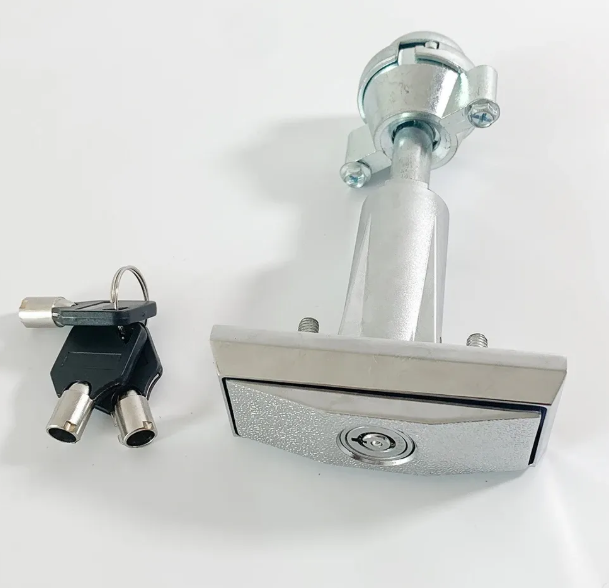
Understanding how a T-handle lock operates is crucial for appreciating its security advantages.
- Engagement and Disengagement: When the T-handle is turned, the internal pins or cams move into position, locking the vending machine door securely. The door remains firmly closed until the corresponding key or electronic signal disengages the lock.
- Key Access: Traditional T-handle locks operate with a metal key. The key aligns the internal pins, allowing the handle to turn and release the latch. For vending machines with advanced security needs, electronic variants exist. These utilize RFID cards, digital codes, or smartphone-based access systems, offering traceability and remote management capabilities.
- Leverage and Ease of Use: The T-shaped handle provides optimal torque, reducing the physical effort required to operate the lock. This ergonomic feature is especially beneficial for operators handling multiple machines daily, improving efficiency while reducing strain.
T-handle locks are designed to resist tampering. High-quality locks feature hardened steel components and anti-drill cores, preventing unauthorized access. In addition, their unique handle design makes forced turning difficult, ensuring the safety of the vending machine's contents.
The ergonomic design of the T-handle simplifies the locking and unlocking process. Operators can secure doors with a single motion, reducing the time spent on routine maintenance or restocking.
These locks are compatible with a wide range of vending machine types, including beverage dispensers, snack machines, ticket kiosks, and even industrial supply cabinets. Both indoor and outdoor models benefit from the robust construction of T-handle locks.
Modern T-handle locks can integrate electronic components, enabling remote monitoring, access logs, and even automated unlocking in response to secure signals. This allows vending operators to streamline operations and enhance security simultaneously.
Compared with other high-security options, T-handle locks offer an excellent balance between affordability and durability. Their long service life reduces the frequency of replacement, offering savings over time.
The market offers a variety of T-handle locks tailored to different security and operational needs:
- Mechanical T-Handle Locks: Traditional locks with metal keys. Ideal for operators who prioritize simplicity and reliability. These are resistant to environmental factors such as moisture, dust, and temperature fluctuations.
- Electronic T-Handle Locks: Incorporate digital access methods, including RFID cards, keypads, and smartphone-enabled solutions. These allow for enhanced monitoring, remote control, and audit capabilities, making them ideal for larger vending networks.
- Cam-Style T-Handle Locks: Feature a cam mechanism to engage the locking system. They are commonly used in industrial vending machines and provide precise alignment for secure closure.
- Spring-Loaded T-Handle Locks: Include an internal spring to return the handle to a neutral position automatically. This reduces the risk of accidental lock misalignment and ensures consistent engagement.
The use of T-handle locks extends across numerous vending applications:
- Beverage and Snack Machines: Frequent targets for theft, requiring robust and reliable locks to protect cash and products.
- Industrial Vending Cabinets: Used for tools, safety gear, and maintenance supplies. Locks secure high-value inventory while maintaining operational efficiency.
- Ticket and Payment Kiosks: Protect sensitive components such as cash boxes and electronic modules.
- Specialty Vending Machines: Including electronics, cosmetics, and healthcare products, where security and quick access are both critical.
Digital transformation is influencing vending security. Smart T-handle locks now allow operators to control access remotely, monitor usage, and track key distribution electronically. Integration with mobile apps provides real-time alerts and reduces the need for manual inspections.
Recent designs incorporate reinforced materials, tamper-evident features, and anti-pry mechanisms. These improvements help protect against increasingly sophisticated attempts at forced entry.
New handle designs consider user comfort and operational efficiency. Some models feature textured grips or extended leverage arms, reducing operator fatigue and enhancing daily usability.
Modern T-handle locks are increasingly designed for outdoor use, with corrosion-resistant materials and waterproof seals that ensure functionality in harsh weather conditions.
The global vending machine market is expanding rapidly, with increasing demand for secure, user-friendly access solutions. T-handle locks are a key component of this growth due to their:
- Reliability in high-use environments
- Compatibility with diverse vending machine designs
- Ability to integrate with both mechanical and electronic security systems
Regions with high urban density, such as North America, Europe, and parts of Asia, show particularly strong adoption of T-handle locking systems. Operators in these regions value the combination of ergonomic ease and high security, making T-handle locks a standard choice for new installations and retrofits.
Proper installation is critical to ensure that T-handle vending machine locks provide maximum security and smooth operation. Before beginning, always verify that the lock model is compatible with the vending machine's door type and thickness.
- Preparation: Start by cleaning the installation area to remove dust, debris, or grease that could interfere with the lock's components. Measure and mark the position where the lock cylinder and handle will be mounted, ensuring precise alignment for smooth operation.
- Drilling and Mounting: If the vending machine requires a new hole for the lock cylinder, use appropriate drill bits and take care not to enlarge the opening excessively, which could compromise the door's structural integrity. Insert the lock cylinder into the designated hole and secure it with mounting screws or retaining plates, making sure it is flush and stable.
- Handle Attachment: Attach the T-handle to the lock cylinder according to manufacturer instructions. Confirm that the handle rotates freely and fully engages the locking mechanism without obstruction.
- Testing: Before fully securing the lock, test the mechanism multiple times with the key or electronic access method. Verify that the door locks and unlocks reliably. Adjust alignment if needed.
- Maintenance Tips: Lubricate the moving parts lightly after installation and schedule periodic inspections to maintain longevity and security.
Correct installation ensures that T-handle locks deliver optimal protection, smooth operation, and extended service life for vending machines.
When selecting a T-handle lock, operators should consider:
- Security Level: Evaluate the risk of tampering and select a lock with appropriate resistance features.
- Operational Environment: Choose materials and coatings that can withstand temperature fluctuations, humidity, and potential vandalism.
- Ease of Use: Ensure the handle design aligns with operator comfort and routine maintenance efficiency.
- Integration Capabilities: Consider whether electronic monitoring, access logs, or smartphone connectivity are required for your vending network.
Proper maintenance ensures that T-handle locks remain functional and secure over time. Recommended practices include:
- Regular lubrication of moving parts to reduce wear
- Inspection for signs of tampering or corrosion
- Periodic testing of mechanical and electronic components
- Replacement of worn or damaged keys and handles
With routine care, high-quality T-handle locks can last for years, reducing replacement costs and minimizing downtime.
T-handle vending machine locks represent a crucial intersection of security, usability, and innovation in modern vending solutions. Their robust design protects valuable products and cash, while ergonomic features streamline operations for vending machine operators. The integration of smart technologies, anti-theft enhancements, and environmentally resilient materials continues to expand the role of T-handle locks in both traditional and advanced vending networks.
As the vending machine industry grows and evolves, investing in high-quality T-handle locks ensures not only the safety of assets but also operational efficiency, regulatory compliance, and customer confidence. From small-scale operators to large vending networks, T-handle locks remain a trusted and versatile solution that adapts to a wide range of security requirements, technological trends, and market demands.