
As global industries continue moving toward automation, self-service retail, and smart infrastructure, the demand for reliable physical security solutions has increased significantly. Among the many locking technologies available today, the tubular vending machine lock remains one of the most widely used and trusted mechanical security systems in commercial and industrial applications.
A tubular lock, also known as a radial pin tumbler lock, features a cylindrical key and a circular internal pin arrangement. Unlike traditional flat-key locks, the pins inside a tubular lock are positioned in a radial pattern around the cylinder. When the correct tubular key is inserted, each groove on the key aligns precisely with the corresponding internal pins. Once all pins are correctly positioned, the lock cylinder can rotate freely, allowing access.
This unique design offers a high level of resistance to picking, drilling, and tampering. It also provides stable performance in environments requiring frequent access and long-term durability.
Tubular locks are widely used in vending machines, coin-operated devices, mailboxes, safes, industrial cabinets, subway systems, electrical enclosures, and computer security equipment. Among these applications, vending machines represent one of the most important use cases due to their exposure in public spaces and their handling of cash, products, and electronic systems.
As vending technology continues evolving toward smart, cashless, and connected systems, the importance of robust mechanical locking solutions remains essential.
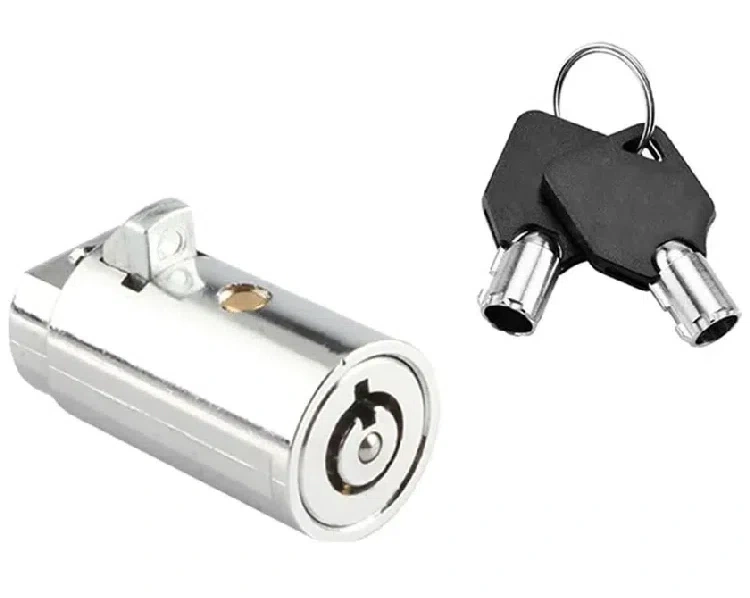
The tubular vending machine lock mechanism is based on a circular pin tumbler system. Inside the lock cylinder, multiple pins are arranged evenly around a central axis. Each pin must be lifted to a precise height for the lock to open.
The tubular key is specifically designed with grooves along its circular edge. These grooves correspond exactly to the positions of the internal pins. When the key is inserted, it simultaneously aligns all pins. Once all pins reach the correct shear line, the plug is free to rotate and unlock the mechanism.
The main components include:
- Cylindrical lock housing
- Radially arranged pin tumblers
- Compression springs
- Rotating plug or core
- Precision tubular key
Because of this circular structure, tubular locks are significantly more complex than standard pin tumbler locks. This complexity increases security by making unauthorized manipulation more difficult. Higher-security versions often include 7-pin or 8-pin configurations, which expand the number of possible key combinations and improve resistance to attack.
Modern vending machines are no longer simple coin-operated dispensers. They now include advanced electronic systems, digital payment terminals, inventory tracking modules, and sometimes even IoT connectivity. These enhancements improve convenience but also increase the value of the machine and its vulnerability to security threats.
Common risks faced by vending machines include:
- Theft of cash or stored products
- Physical break-in attempts
- Vandalism in public environments
- Tampering with payment systems
- Unauthorized servicing or access
- Damage to internal electronic components
Because vending machines are often installed in unattended or high-traffic public areas, strong physical security is essential. Tubular vending machine locks provide a dependable first line of defense by securing access points such as front doors, cash boxes, maintenance panels, and product compartments.
For vending operators managing large-scale machine networks, reliable locking systems are not just a security feature but a critical part of operational efficiency and asset protection.
Tubular vending machine locks are designed specifically for environments that require frequent access, high durability, and strong resistance to tampering.
The radial arrangement of pin tumblers increases mechanical complexity and enhances resistance to traditional lock-picking techniques.
Many modern tubular locks use 7-pin or 8-pin systems, which significantly increase the number of possible key variations and improve security levels.
The cylindrical key structure ensures precise interaction with internal pins. Each groove must align exactly, which reduces the risk of unauthorized duplication.
Industrial-grade tubular locks often use hardened steel or zinc alloy components to resist drilling, cutting, and impact damage.
Some advanced models include reinforced plates and internal protective structures designed to prevent forced entry attempts.
Protective coatings allow tubular locks to operate reliably in outdoor, humid, or dusty environments without performance degradation.
Tubular vending machine locks are engineered for repeated daily use, maintaining smooth operation even under heavy mechanical cycling.
The circular pin system and precision key alignment make tubular locks more secure than many traditional locking mechanisms. This design significantly reduces the risk of picking or manipulation.
Vending machines operate continuously in public spaces, requiring locking systems that can withstand long-term use. Tubular locks are designed for extended service life with minimal maintenance requirements.
The cylindrical structure allows tubular locks to fit easily into vending machine doors and panels without requiring complex installation space.
Authorized personnel can quickly unlock machines for restocking, maintenance, or cash collection, improving operational efficiency.
Tubular locks are suitable for a variety of vending machines, including snack machines, beverage dispensers, ticketing systems, and automated retail kiosks.
Compared to electronic locking systems, tubular mechanical locks provide a reliable and affordable security solution with low maintenance costs.
Although vending machines are the primary application, tubular locks are used across many industries requiring secure physical access control.
Used to secure cash compartments, product storage areas, and service panels in automated retail machines.
Common in arcade machines, laundromats, parking systems, and gaming machines.
Used in mailbox systems, lockers, and secure storage units in residential and commercial environments.
Protect electrical panels, control systems, and industrial equipment from unauthorized access.
Used to secure desktops, laptops, and server equipment in offices, schools, and institutions.
Applied in subway gates, ticket machines, and transportation control equipment requiring durable security solutions.
Tubular cam locks are widely used in commercial and industrial environments where secure yet convenient access is required.
These locks are commonly installed in:
- Smart vending terminals
- Electrical cabinets
- Advertising display systems
- Fuel dispensing equipment
- Utility access panels
- Industrial storage enclosures
Their popularity is driven by their compact design, ease of installation, and reliable mechanical performance. They are especially suitable for systems requiring frequent authorized access while maintaining strong security control.
Tubular push locks are designed for environments where fast access and secure locking are both required. These locks are commonly used in display cases, transportation equipment, and industrial storage systems.
Key advantages include:
- Fast locking and unlocking operation
- Simple mechanical structure
- Reliable long-term durability
- Strong resistance to tampering
- Compact installation requirements
Although highly reliable, tubular push locks require specialized keys, which can make replacement more complex if keys are lost.
In addition to industrial applications, tubular locks are widely used for protecting computing equipment from theft or unauthorized access.
They are commonly installed on:
- Desktop computers
- Laptops
- Server racks
- Shared public workstations
Key benefits include:
- Simple installation process
- Strong physical anti-theft protection
- Compatibility with multiple device types
- Long service life with minimal maintenance
- Cost-effective security solution
These locks are widely used in offices, libraries, schools, and government facilities where shared or public access to devices is required.
The tubular lock industry continues to evolve with improvements in precision engineering and material science.
Key advancements include:
- High-precision CNC machining for improved accuracy
- Use of hardened steel and corrosion-resistant alloys
- Enhanced anti-drilling structural designs
- Improved internal pin alignment systems
- Restricted key duplication technologies
- Integration with electronic access control systems in hybrid models
These developments improve both security performance and product lifespan, making tubular locks suitable for increasingly demanding environments.
While tubular vending machine locks offer many advantages, they also face several operational challenges.
As lock manipulation tools become more advanced, manufacturers must continuously improve internal complexity and resistance to unauthorized access.
Tubular keys require specialized production processes, which can make duplication and replacement more difficult compared to standard keys.
In high-traffic vending environments, frequent use can gradually wear down both keys and internal components, requiring periodic maintenance or replacement.
Outdoor installations may face moisture, dust, temperature fluctuations, and corrosion risks if proper protective materials are not used.
Tubular vending machine locks remain one of the most reliable and widely adopted mechanical security solutions in the modern lock industry. Their circular pin structure, precision tubular key system, and strong resistance to tampering make them highly effective for protecting vending machines and other automated systems.
From vending machines and coin-operated equipment to industrial cabinets, computer systems, and public infrastructure, tubular locks provide consistent, cost-effective, and durable security performance across a wide range of applications.
As automation and self-service technologies continue to expand globally, the need for dependable physical security solutions remains essential. Tubular vending machine locks continue to play a critical role in protecting valuable assets, ensuring operational safety, and supporting the growth of modern automated retail and industrial systems.
